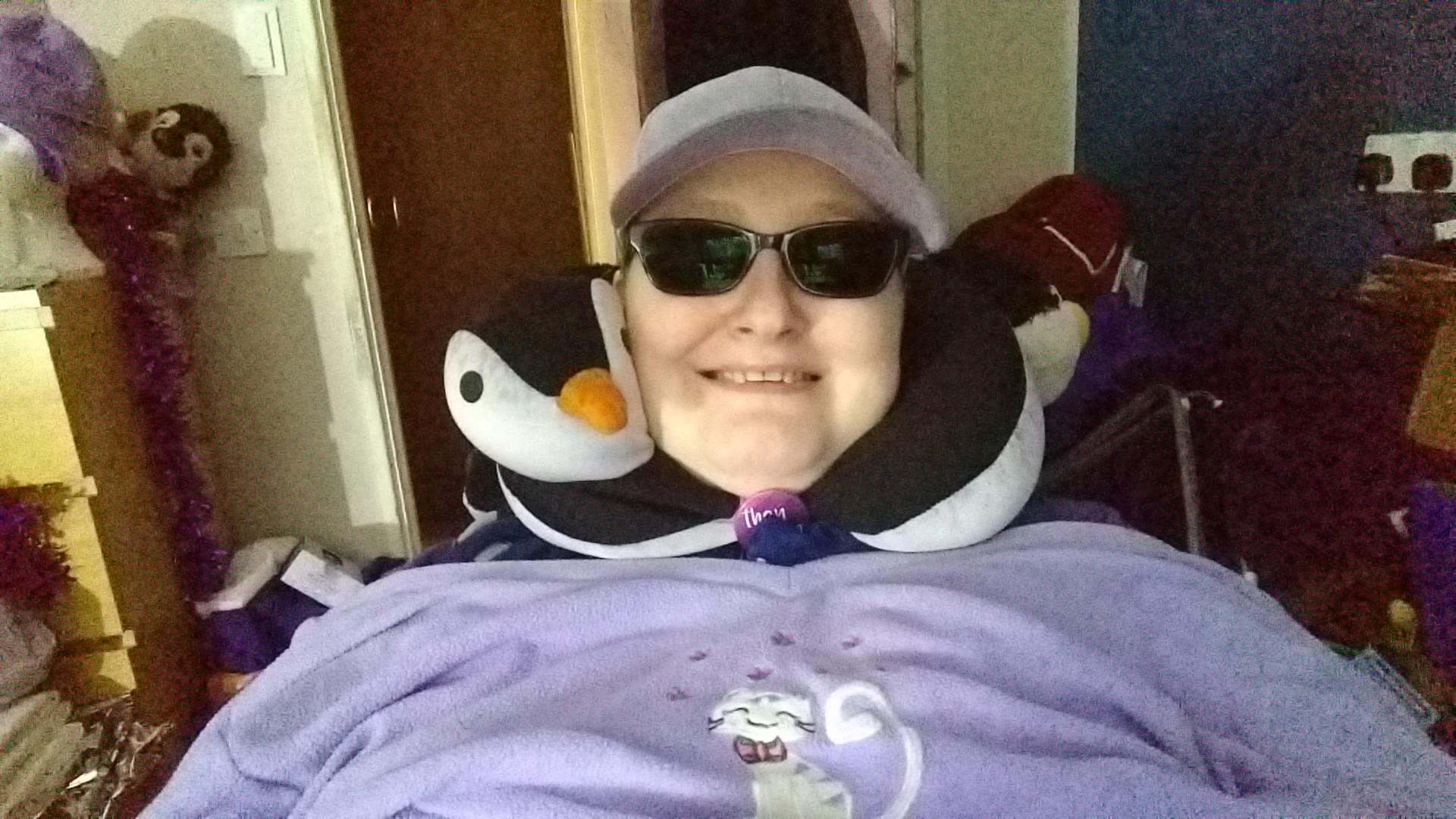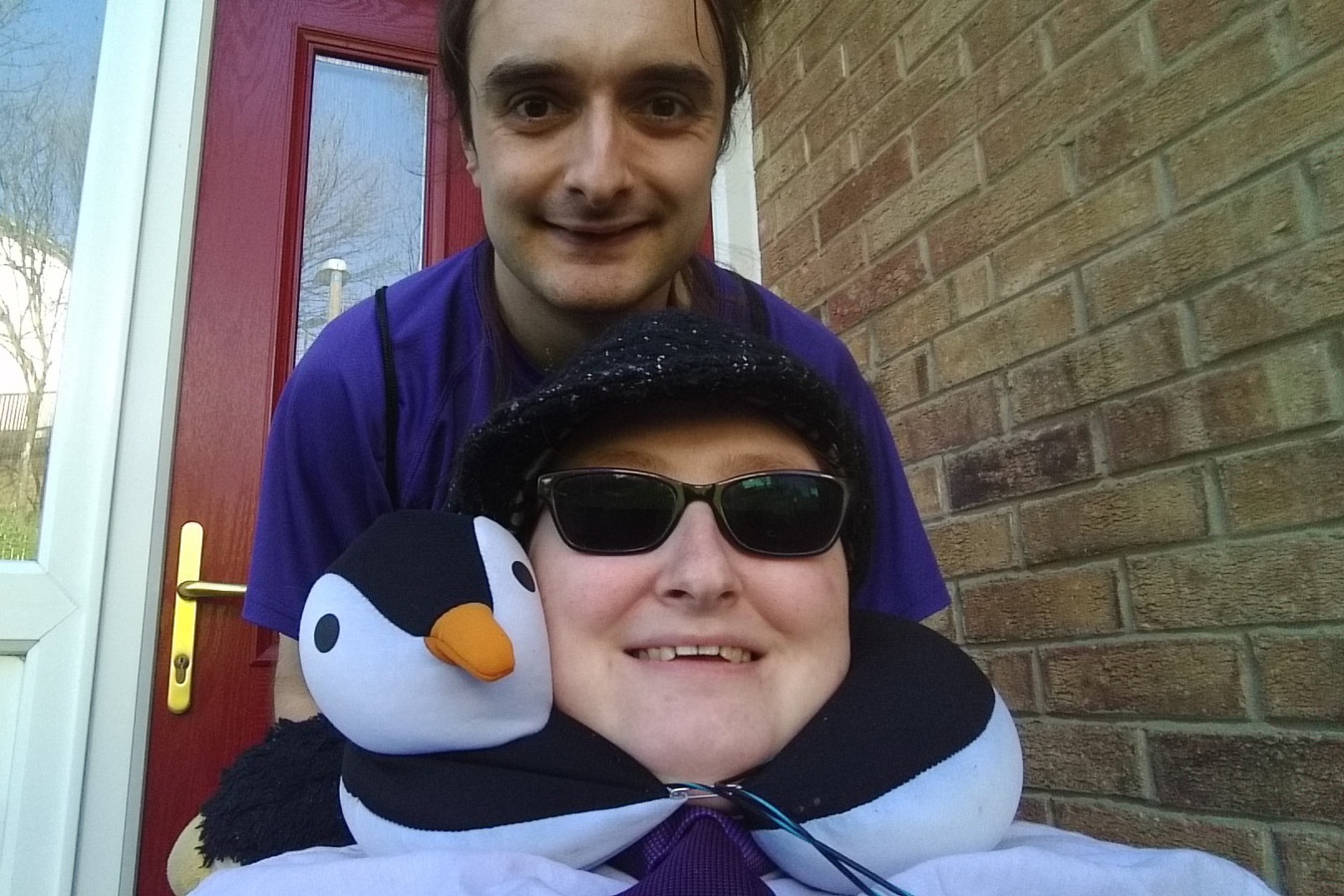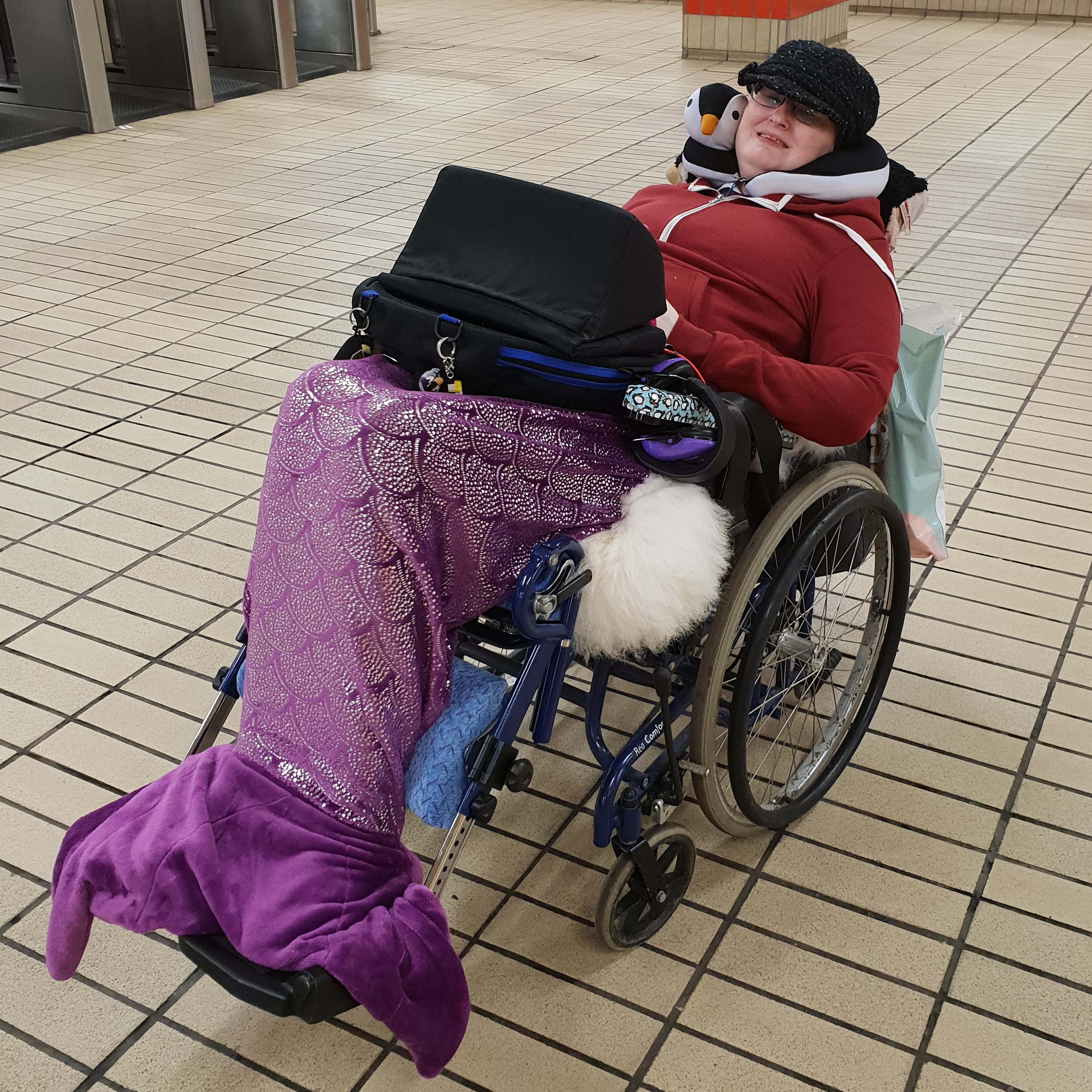
"I find penguins at present the only comfort in life. One feels everything in the world so sympathetically ridiculous; one can't be angry when one looks at a penguin." – John Ruskin
In a long ramble a few days ago, I mentioned how the government is planning on changing disability benefits which will make things really bad and mean that seriously ill and disabled people won’t get the help they need. Turns out the government have also been not telling the truth about the consulting and stuff that they did, and so ordinary disabled people funded research (carried out by other ordinary disabled people) into the government’s plans and things.
As the plans are going to affect lots of people who could really do without the extra stress of worrying if they’re going to lose money, become homeless, lose carers, lose their jobs because they can’t afford to get there, it’s important that as many people as possible read and distribute the linked press release and report. For my part, I’ve emailed it to my MP Dave Anderson (Blaydon constituency) so I’ll report back as soon as I hear from him. I’ll also link to more informative and better written blog posts as I find them.
I’m having a lot of brain fog issues at the moment, so this may not make much sense and may contain errors. Please correct me if you spot any- I’m not looking stuff up as I’m typing this.
In the UK currently there are lots of cuts to disability benefits occurring. Most of them aren’t being branded as cuts of course- they’re branded as “improvements” to reduce the amount of benefit fraud and help disabled people back into work.
There are problems with this. The two main disability benefits are Incapacity Benefit (currently being replaced by Employment Support Allowance – ESA) and Disability Living Allowance – DLA (which is planned to be replaced with Personal Independence Payments – PIP). Despite all the media saying that there’s massive amounts of fraud with these benefits, the fraud rate for Incapacity Benefit is 0.3% and the fraud rate for DLA is 0.5%. These are the lowest levels of fraud for any state benefit, including the state pension (which is based off age, so I would have thought it would have been harder to claim fraudulently).
For the last couple of years, you haven’t been able to make a new claim for Incapacity Benefit (the out of work sickness benefit). You have to claim ESA instead. ESA is a lot harder to get on purpose. I’ve never actually claimed Incapacity Benefit (I get Income Support for incapacity reasons instead, as I didn’t have enough national insurance contributions and they messed up with the young person’s rule years ago, but never mind :p) but I think you filled in the form, submitted sick notes from the doctor while the DWP assessed you by getting information from the form and doctors, you’d get a medical with a doctor if there was any confusion or they needed any information, and then if you were classed as too sick to work, you’d be on Incapacity Benefit for a while without having to submit sick notes, and depending on why you were on it you would be reassessed periodically to see if there’s any change. That could all be wrong though, as I’ve never done it and I can’t be bothered to look it up right now.
For me, I had to submit sick notes for a bit, but when I claimed DLA and received the higher care rate (DLA is for care and mobility needs due to long term illness or disability, and is not an out of work benefit- you can get it whether your working or not) which meant I needed care frequently during the day and night, I was automatically considered too ill to work and no longer had to submit sick notes and didn’t have to worry about having medicals and stuff. I think this applied to Incapacity Benefit and Income Support for incapacity reasons.
Quick note about Income Support- that’s what you get if you’re poor, not working and not able to work for some reason (being too ill, being a carer, being a parent of a small child). As you can guess from the name, it’s based on making sure you have enough income (as the letters say, how much the law says you need to live on), so some people would get a bit of Income Support on top of Incapacity Benefit, especially if they live alone, also get some DLA (which means you get extra money on your Income Support as well, though it gets complicated so will not discuss them here) or if they live with a partner who doesn’t work, or earns tiny amounts in part time work. If you can work but aren’t because you’re unemployed, you get Job Seekers Allowance instead, which is the same rate as Income Support but requires you to be looking for work.
ESA is a bit different. You send in your doctor’s sick notes as normal at the start (though they’re now called fit notes), fill in a form from hell (all disability benefit forms are forms from hell- with one exception being the 4 page DLA renewal form that I’ve had once but most people never see). They contact your doctors and stuff, then call you in for a medical with ATOS. The medical person may be a doctor, but might be a nurse or another health professional instead. They’ve probably had no experience with whatever it is that’s making you too ill to work (especially if it’s mental health issues) and will probably show no interest in knowing either. The medical is a tick box thingie on the computer, with lots of questions like “can you touch your toes” and “can you raise your arms above your head” (even if you’re claiming for mental health reasons). They tick boxes, then send the report to the decision maker at the DWP, who is meant to take everything into consideration (the form, your GPs and specialist reports, and the ATOS medical) but who is more likely to agree with whatever the ATOS medical person said and ignore everything else (you know, the stuff from you and people who actually know you and your illness/disability).
There’s three rates for ESA. There’s the assessment rate, which is the same as Job Seekers Allowance (and for the more observant of you, the same as the base rate of Income Support, but that’s not really relevant as you can get ESA and Job Seekers even if not completely poor based on your national insurance contributions- they call that contributions based, funnily enough). You’re on that while being assessed (no way!). Then when you’ve been all assessed, there’s the Work Related Activity Group – WRAG rate, which is a bit more, though the politicians who set the rates would still struggle. You’re meant to be put in this group if you’re not well enough to work right now, but you should be able to work in the future with a bit of help and support, so you have to attend interviews with this goal every few weeks (but you don’t have to actively seek work as you do on Job Seekers). If you’re considered too ill or disabled to work at all (there is some criteria for this, such as not being able to walk or self propel a wheelchair 50 metres) then you get put in the support group, which is even more money (though still not enough for those pesky politicians to live off) and means you don’t have to do the interviews.
Unlike the current system, there’s no automatic exemption from reassessment if you’re on higher care DLA. Pretty much everyone (it may be everyone, but I can’t remember right now) will be reassessed again after a period of time, which may be as short as a few months (brain is saying 3 or 6, but I’m not sure which). Even if you’re so disabled that you get put in the support group and get high care DLA, you may have to go through the whole lot again after a few months.
To make things worse, lots and lots of people are assessed incorrectly. They either fail to qualify for the WRAG rate so are expected to go job hunting, or they put in the WRAG when they should be in the Support Group. As this is not on, they appeal. And win- 40% if doing so by themselves, 70% if they get help. There’s currently a massive backlog of appeals, they’ve had to bring in extra judges to process them, and if you need to appeal you’ll probably have to wait a year. While you’re appealing, if you’ve been denied ESA at all you’re allowed to claim the assessment rate (which isn’t much- about £67 a week, and less if you’re under 25). If you’re lucky enough to be put in the WRAG instead of the support group, you get a bit of extra money (though not as much as if you were in the support group) but you’ll have to do those interviews while you’re waiting for your appeal to go through, even if you’re bed bound.
Of course this is all really stressful. Even while there were lots of problems with ESA (especially the tick box medical) and all the charities and even the politicians could see it wasn’t working properly for new claimants, the government in all their wisdom have now started moving everyone who was on Incapacity Benefit over to ESA. And people who got Incapacity Benefit without issue for years (because they qualified, not because they were scrounging- remember the 0.3% fraud rate?) are being thrown off ESA and expected to go on Job Seekers and look for a job. So of course they’re appealing as well, which is making everything worse. Oh, and those of us on Income Support for incapacity reasons are also going to be moved over to ESA by 2013. I can’t see that improving the situation.
So that’s ESA. It’s failing, and the government aren’t fixing it. At least they’re acknowledging there are problems though, while saying we’re all scroungers. I guess that’s something…
DLA next. As I said earlier, it’s for those with a long term illness or disability that means you have extra care or mobility needs. It’s not an out of work benefit, as you can get it while you’re working (and indeed, it helps some people with disabilities to be able to work, by helping with extra costs). Children can get it as well, and if you’re already getting it when you turn 65, you’re allowed to keep claiming it (if you become disabled after you turn 65 though, it’s Attendance Allowance for you, which is different and not as good, but I’m not going into that further here).
There are two components to DLA- care and mobility. The care component has three rates- low if you just need a bit of extra help during the day, or (if over 16) you can’t cook a proper meal for yourself because of your disability (bunging something in the microwave does not count as proper cooking). Middle you get if you have frequent care needs during the day or night, and high if you have frequent care needs during both the day and night. There are two rates for the mobility component- lower if you need someone with you when you’re out and about, and higher if you’re unable, or virtually unable to walk.
Getting DLA is not easy, and the system isn’t perfect. There’s the form from hell (over 40 pages) then all the evidence and stuff, then you might need to have a medical with an ATOS doctor (I think it’s always a doctor for DLA, but I may be wrong). Unlike ESA though, the medical actually goes through what your disability is, and how it affects you and what your care and mobility needs are. I’ve only had to do it once (lucky me!) but the doctor was nice, listened to me, understood when I couldn’t do certain tasks, and let me ask questions and make some clarifications at the end. I’m hoping that’s the normal experience, but I suspect I probably just got lucky.
If you’re very lucky (like me), you get DLA first time. More likely though, you’ll either get declined or they’ll put you on a lower rate than you’re entitled to. This is because the decision makers have a tendency to completely ignore everything you wrote and all your evidence, and send you a nice letter with reasons that appear to be written about someone else. When I asked for them to relook at my claim for a change in circumstances (I became unable to walk) that happened. Anyway, when your unsuccessful, you appeal. It appears that more and more people are being declined DLA, including people who have claimed it successfully in the past and have not gotten any better (or have got worse). I can’t remember how many DLA appeals are successful, but I think it’s a lot lower than for ESA as more claims are accurate to begin with (though that’s becoming less of the case now).
Okay, so DLA isn’t perfect, but once you’ve got it it’s not too bad. You may get it indefinitely if you’ve got something that won’t get better (this means they can look at your claim again, but may not for a long time), or you’ll get it for a certain period of time before needing to reapply. For me, I got it for one year the first time, two years the second time and three years the third time (I then asked for a reconsideration due to change in circumstances a year into the third claim, because I became unable to walk so was entitled to higher rate DLA, having previously got lower rate). My DLA is due for renewal in January 2013, and though I’m hoping not to need it (or at least not need it at as high a rate, as with the current rules I’ll always be entitled to some due to autism) I’ve accepted a probably will, but may have it declined.
Despite its problems, DLA works really well. You know when you’re going to be reapplying. Having DLA works as a passport to other things, such as extra Income Support, Carer’s Allowance if you have an unpaid carer (for middle or higher care), a blue badge and a free bus pass if you get higher mobility, and lots of things that require proof of disability accept a DLA letter. I also really like the 4 page renewal form I got last time, as being able to tick that nothing had changed, sign it, send it back and then getting it renewed for 3 years was really painless. The government could probably improve the form, but at least you know with it you’ve probably gone through everything. The three different rates of care are also good, as it acknowledges the extra costs that come up if you’re mostly independent, but may need some help for part of the day, say for cooking a meal.
The government wants to scrap this mostly working benefit and replace it with PIP. They claim this is to improve it, but they’ve also said they want to save 20% off the costs of DLA with it. They’re doing this by tightening up the criteria for it, so that lots of disabled people who are getting DLA now won’t be entitled to it. They’re removing the lower rate of care, and lots of things that DLA accounted for will be ignored in it. And it sucks. I’ve looked at the criteria and if I’m still as ill when it’s implemented I should get the higher rates still, but I suspect that I will have to fight for it and other people with less obvious disability will be declined it, even if they should be entitled to help. The transistion is meant to take place in 2013.
I’m upset. So are lots of other disabled people, who are far more eloquent than me. The government and the press are bringing in these changes by hounding us in the media and saying we’re all scroungers and we should all be working. My friends, some of whom are just as disabled as I am, are being denied the benefits they need to live. And with all these changes, it’s only going to get worse.
Today I had three teeth removed under a general anaesthetic. Considering everything, I think it went well.
The appointment letter said to be there for 8am. I woke up at 5am, as the last time I could drink something was 6am and it can sometimes take me a while to get fluid into me. It also gave me time to wake up. I woke Johan up about 6am, after I’d taken my meds, and we both got ready to go. I even got dressed in comfy clothes, but wore my new fluffy purple slippers :p
At about 7am Johan phoned the ward to check there was a bed for me and to tell them that I’d be arriving by ambulance so basically we had no say in when I’d arrive. I’d taken some cyclizine as I’d felt nauseous and didn’t want to vomit (as they would be likely to cancel it if I were sick) so felt quite tired and just rested while waiting.
At 9.30am the ambulance hadn’t shown up, so Johan phoned the ambulance people to confirm they were taking me. One was on its way and it arrived 15 minutes later. This time it was proper stretcher transport, not the accidental one I got last week, so I couldn’t take my wheelchair. This meant Johan and I got confused as I tried to make my own way out of the flat as normal, but then had to manage to walk a few steps to get on the stretcher outside the front door. The ambulance men did hold me up and support me with that, but it was very painful and I felt really ill and dizzy, so it was a bad idea (I offered to crawl as it was only a short distance, but they said that would be undignified). Once on the stretcher I was mostly okay, though we did forget my ear defenders as they were on my wheelchair. I did have my sunglasses on though so that was something.
When we arrived at the hospital they took me up to the ward and I managed to shuffle onto the bed from the stretcher. One of the things I am still able to do is very short bursts of activity to enable transfers, which always surprises people as I do them quickly to try and prevent getting stuck (I’ve tried doing them slowly before and I normally end up getting too tired halfway so need help). Johan gave the nurses a list of things to try and help them understand me a bit better, and they mostly followed it, which was awesome. Before they left the ambulance men told me off for trying to get out of the flat by myself and told me that I really need to use the carry chair next time. That’s me told :p
It was only about 15 minutes of people going through what was going to happen and stuff before they were ready for me. I tried to confirm as much as possible, but I was feeling pretty exhausted by this point so I’m not sure how much I said made sense. I’d already agreed to it all when I could think though so I wasn’t worried. They brought a trolley for me, I did my shuffle over, and they took me down to the theatre. They went through things again, then took me through to be put to sleep. I warned them I’d panic when they put the cannula in (and they kept telling me the needle was out when I was complaining that the cannula itself was hurting). They then gave me some painkiller that I think also makes you drowsy (fentynl or something- I’ll look it up tomorrow :p) and I can’t remember after that.
When I woke up I was in massive amounts of pain. Surprisingly it wasn’t my mouth that was bothering me, but my arms and legs were agony and I also had a horrendeous headache. It turned out they’d given me paracetamol, which explained the headache (note to self- make sure all medical people know never to give me paracetamol) and I suspect my arms and legs were hurting because they were in a bad position and I wasn’t really able to move them. Johan says they were worried by the amount of pain I was in (I may have screamed a few times- I can’t control it that well when I’m tired) but they didn’t show it to me, nor did they show me they were concerned about my full body violent shakiness (I’d put it on the sheet that it happens when my body is overwhelmed).
They took me back to the ward and when I was able to gave me tramadol, which took a few goes to swallow as I was finding it hard to control my mouth. I was on a drip and had to finish the glass of water before they’d take me off it, but the straw it had was really awkward for me. I was struggling to think so wasn’t able to ask Johan to get my hydrant out, which would have been a lot easier for me. I felt absolutely rubbish as there was too much light and noise, and though I had my eye mask I didn’t have my ear defenders so everything was just too much, and was making the pain worse. The tramadol didn’t do anything, so I had some ibuprofen (got Johan to give me some of the liquid stuff I’d brought in rather than trying to swallow any tablets) which helped a bit with the headache and the mouth pain, though did nothing for the arms and legs. I told Johan that I wanted to go home since I’d be more comfortable there, and he and the nurses agreed that was the best idea.
The doctor came to check on me, and his touching me made my voice disappear (he’d obviously not read my sheet). Luckily by that point the noise had died down as everyone else had left so I was able to tolerate the light with sunglasses on, so I got Johan to get my Transformer out so I could type. A nurse came and told me lots of things I can’t remember now, but are on a piece of paper she gave me so I’ll get Johan to be in charge of that. They phoned for the ambulance and a little bit later the same ambulance guys came.
The journey home was uneventful- Johan was talking to one of the ambulance guys and I was able to type a couple of things to join in when I could (we were talking about computers and things). This time they insisted I’d have the carry chair, and I wasn’t going to argue as I knew it was the best idea. I again did a quick shuffle (note to self- explain to new people that quick shuffles are easier for me than doing things slowly for transfers) and I held on to my penguin while they wrapped me in my blanket and strapped me in. They got me to my bed and I collapsed onto it, and I was glad to be home.
So that’s been most of today. Since I got home I’ve done some very basic stuff on my Transformer, had a few soft things to eat (jelly, Milkybar chocolate dessert thing, a prawn cracker and a bit of trifle), had some Mountain Dew to drink, taken more painkillers which actually helped once I took the double dose my GP allows me, and lay in bed. Colin also came over to ask Johan to print some stuff for him, so I was able to whisper to him a bit (my voice came back after a bit of resting, but whispering is a lot easier on my throat). I also had a meltdown when Johan went to the shop and instead of coming into the living room when he came back he disappeared into the kitchen, which made me panic. That was not good.
Plan for the next few days is just to take it easy. I’ve got nothing planned from now until Christmas other than Christmas shopping, which I’ll be doing over the next few weeks. That doesn’t require leaving my bed so I’m happy. Johan’s got some stuff to do with the carer’s association but he can do that himself, now he knows they can help and he’s spoken to them before. They’re doing brilliantly at writing to my social worker. I won’t be going out again for the near future, as the only way I can get back in is by ambulance carry chair. That”s quite scary, actually, especially since I don’t have medical priority for the council housing list yet as I’m not ill enough.
I’m happy that the nurses at the ward did such a good job of taking my needs into consideration today. I think the list helped. I’m also grateful to the ambulance men who helped me and were keen to make me as comfortable as possible. You rock
We’ve cancelled all the carers. This morning I was actually looking forward to the carer coming, as the rota said it was lovely Icelandic carer and she’s awesome. Unfortunately it wasn’t her- the carer who made me really ill on Saturday turned up instead, an hour late. We hadn’t been told that we were getting her, or we would have cancelled in advance, because she makes both of us anxious, doesn’t read or follow the care plan, and doesn’t do anything because I can’t have her touch me since she made me so ill and as she won’t read the care care plan never even stayed long enough to be asked to do some basic housework.
This was the last straw. We’ve been having problems with the agency (DH Healthcare) for months, and things were only getting worse. There is no consistency- the lowest amount of different carers I’ve had is 7 in a week (we got 13 calls a week). Back when I used to have two carers in the evening, it wouldn’t be unusual to have 15 different carers. I’m autistic, so find new people difficult to deal with. They would show up randomly, or not show up at all. Carers on the rota would be replaced with someone randomly. We were never informed of any changes. We had to ban some carers because they were so bad they’d make me ill, and they’d still turn up on the rota so we’d have to cancel the call. The carers that were good and we liked we were seeing less and less of. The agency refused to tell new carers anything about me before arriving, which meant they expected two people with communication problems to do their work for them. Some of the carers were so rough they’d cause me to scream in pain. Some wouldn’t follow any instructions. Some would talk to me in such a way it would make me absolutely terrified. A lot of the carers would rush- my calls were 45 minutes in the morning, 30 minutes for a normal night call and an hour for a bath call specifically so I could take things slowly and rest when I needed to. Most of the carers would not read the care plan, so wouldn’t follow it. There was even one carer who when told what was on the care plan, actually refused to follow it, as she “didn’t do domestic” (my care plan included some basic housework, as it was to try and help Johan out as well). A lot of the carers would not take my communication difficulties into account, even when told about them- I cannot cope with open questions, but they’d persist in asking them. Quite a few would blatantly lie- to us, the agency and on the record sheet they are supposed to fill in.
There were some good carers. They’d listen to us, take things slowly, treat us as equals rather than talk down to us, try and help me maintain my dignity while helping me. They’d use their initiative- if there were dishes to be done, they’d do them without having to be asked to. We’re going to miss those carers. Unfortunately I’ve seen very little of them recently, as they very rarely appeared on my rota.
We’ve tried complaining. We’ve had lots of meetings to try and sort things out, and they never were. Johan has also been struggling recently, so hasn’t been able to complain every time something went wrong (which would have meant him having to complain about 5 times a week). I’ve tried telling my social worker, but he doesn’t seem to actually care.
The care agency mostly caters for older people. I am scared for the other people they are meant to be providing care for, as I’m a young person who isn’t afraid to complain, and there have been a lot of problems. I also have Johan to look after me, especially when they’ve just not turned up. They couldn’t meet my needs, but refused to say this and continued to send out people who were not able to deal with them. In the last week there’s been lots on the news about how home care for older people breaches their human rights (for example http://www.bbc.co.uk/news/health-15836500), and I wasn’t surprised because I’ve experienced some of it for myself.
I know that my needs are quite specific, but most of them aren’t too hard for anyone to implement. I need people who can be quiet when talking to me and working, and who don’t wear strong perfume. I need people to understand that I do have communication issues, so I’d rather they ask specific questions for what I want doing (all listed on the care plan, and I even had a list with just those printed for them). I need people to understand that because my M.E. is variable, there will be days where I’ll want more personal care, and other days when I’m too ill for any, so maybe they could go tidy the kitchen a bit instead. If for some reason I can’t cope with them being here (sometimes when I’m very ill I can’t cope with any extra noise or movement) they need to leave as soon as we tell them.
The biggest things I need though are consistency. I need a low number of total carers, so we can teach them our ways. I need them to come when they say they’re going to (at the same times each week), and to tell us if there’s going to be any changes. I also need them not to come early, as I find that causes me to panic (though they can be up to an hour late, I’d like to be told if it’ll be more than half an hour, though).
We’re currently trying to swap to direct payments, and although we were initially after a personal assistant, we’ve now realised that just going with a different care agency may work instead. My care plan is also out of date, as it was written up in May, when I was able to do a lot more for myself. Most of my personal care Johan can do, though he struggles a bit with washing my hair and plaiting (he’s gotten good at brushing it now I have a tangle teezer) and isn’t confident with the idea of brushing my teeth. He really needs help with housework though, and that’s one of the things my care package is meant to help with, so he can concentrate on looking after me.
This has got a bit long, so I’m going to leave it there, but I’m relieved that I don’t have to worry about the carers any more. Hopefully things will start to improve soon.
I woke up this morning at 4.30am, and discovered I’d forgotten how to talk. It’s now nearly 7pm and I still haven’t remembered how to.
This morning I had the hospital appointment. Ambulance transport rules say that if you have a morning appointment, you must be ready by 8.30am even if the appointment is at 11am. The ambulance arrived at about 9am, and I don’t know if it was a coincidence or someone actually requested it for me, but it had a stretcher in it so I was able to lie down We got to the hospital about 9.40am, and asked if there was somewhere I could lie down. There wasn’t, but they instead said they’d see me immediately, which they did.
My appointment went well. We got around the not being able to talk problem by me typing on my tablet and Johan reading what I was saying for me. They went through my medical history (a lot of questions were answered with “only because of my M.E.”, which was a bit scary), told me what was going to happen, had me sign the consent form, and then got me on the bed to listen to my chest and feel my tummy. It was over by 10am, and the nurse sorted out calling for the ambulance to take me home.
We again asked if there was somewhere I could lie down to rest, but they didn’t have anywhere available. However, we went to the main entrance to wait and found some comfy sofas, so I reclined (and at times lay) on there. An hour later and the same ambulance came to take me home. Because I’d only actually sat up for about 20 minutes, I was able to get up the stairs on my bum. Johan helped lift me and the ambulance woman followed with my legs.
The ambulance people were amazing. They even shut the blinds on the way back because the light was bothering me. I’m also grateful for the doctor and nurse at the appointment who made sure the appointment happened straight away and was over as quickly as possible. Because it went so well, I was in a lot less pain and felt a lot less ill than I had done the previous week. I was still very sore and didn’t feel great, but I could cope with it.
On Friday 2nd December I’m going back to get my teeth removed under a general anaesthetic. We’ve booked stretcher transport, and though they hope I’ll only be there for the day they have advised me to take overnight stuff just in case. I’m going to write a sheet with all my important information to take with me to try and help the nurses and people look after me. I’m also going to ask that Johan be allowed to stay with me on the ward, as he knows me and can help me communicate. If it goes as well as today did, that will be awesome.
Other than the appointment, I’ve spent most of the day in bed. Had a weird dizzy spell this afternoon, where I suddenly felt extremely dizzy and weird, though without any extra nausea. Not sure what caused that, or what it was about. I had a 20 minute nap and I wasn’t as dizzy afterwards. I also had a bath this evening as it had been more than a week since my last one so I was desperate. It was a new carer and it was interesting trying to get things sorted when I couldn’t speak, but she was happy to listen and to be told how we like things done. I think I like her
I’m probably going to sleep soon, as I got woken up at 4.30am by my bad tooth (it calmed down quite quickly after waking me up, luckily). It’s now getting towards 8pm, so that’s a good time to be thinking of sleep.
It is hard for me to write as my brain keeps getting stuck. I hear something and have to repeat it lots and can’t stop it. I am also having problems trying to translate stuff into proper English with proper grammar.
Not sure why I am having a brain stuck day, just that I am. I will sleep soon and see if that helps.
Today I managed to rename my main character in World of Warcraft, from Danní to Danni. This made me happy. Blizzard let me have the name as someone else had used it but only for a level 1 and it had been inactive for a long time. This should make things easier for my guildies and things, and it makes me happy to be able to have my proper name in World of Warcraft
I had jelly and ice cream. My mouth was being silly and forgetting how to chew, but that is not important for jelly and ice cream. It also kept breathing the food in instead of swallowing it, which is making my chest a little bit sore. I am not sure why it is being silly.
It’s the 1st November, which means it’s Autistics Speaking Day again. This started last year as a response to Communication Shutdown, which luckily isn’t being repeated again. My post from last year is here, and the website is here.
I was diagnosed with Asperger’s Syndrome when I was 21. Since then I’ve learnt lots of ways to deal with some of the more difficult parts of it, mostly thanks to Interface (the autism unit at South Tyneside College). This doesn’t mean I’m “cured”, though. I was born autistic, and will be so the rest of my life. I still have a lot of difficulties, and the M.E. also makes it worse. Here’s how it still affects me.
Over-sensitivity to noise, light, smell and touch.
That’s all the senses except taste, where I may be over-sensitive a bit (I can’t cope with spicy foods, and much prefer plain foods) but it’s a lot easier to control. My reactions to these are a bit less extreme than they were, but it’s an area where M.E. makes things worse. I normally wear sunglasses when I’m outdoors, I have ear defenders to wear when it’s noisy (which I often have to wear if I go out in public because of the noise of traffic, people and things) and sometimes listen to music to drown out other noises (often with the ear defenders). M.E. in itself causes over-sensitivity, so for me it just means everything feels a hundred times worse when I’m having a bad day. On those bad days, I lie in bed with an eye mask and ear defenders on (because the normal noises around me and all light is too much) and no-one can touch me as even my pyjamas and bedclothes feel like torture. As for touch, I do not like people touching me, but as I’m unable to do things for myself I have to allow it. I am getting better at coping with it when it’s not a bad day, and even let a stranger put make-up on my face a while ago. I also can’t cope with strong smells as they make me feel like I can’t breathe, and some of them make me vomit.
Problems with communication.
Communicating with people uses a lot of energy. It takes energy to listen to people, process what they’re saying, and then respond in a way that they can understand. This is another area that M.E. makes more difficult, as I can no longer just throw more energy into communicating. I am verbal most of the time, but I have more times of being non-verbal than I used to, since I became more ill. I become non-verbal when I’m overwhelmed. With autism it’s from sensory overload, and the M.E. causes it when I’m overloaded because of pain. This can cause problems- when I was in a care home earlier this year I was unable to answer open questions, became non-verbal and wasn’t able to communicate that I needed a drink or the toilet so went without for 19 hours. We have similar problems with the home carers (especially since Johan has the same problem answering open questions) but most at least some of the carers are learning to work around it.
I’m also unable to use the telephone as I struggle to hear what the other person is saying without being able to lip read, have to respond almost instantaneously, and it makes me very anxious. A lot of places still don’t allow communication by email, so I’m reliant on my husband to phone for me. My favourite so far is the National Autistic Society phoning me twice (once on my landline, once on my mobile) and insisting on talking to me. When my husband told them I couldn’t talk on the phone, they asked why, then one of them didn’t understand when my husband said it was due to my autism. They said they were going to write to me about what it was, but so far I’ve not received anything, and it was at least a month ago.
Meltdowns and shutdowns.
This is hard for me to talk about, as I don’t really want other people to know what I’m like at my worst, but since they’ve been happening more than normal recently I should probably mention them. A meltdown is similar to a panic attack in appearance (I also experience panic attacks) but it’s not the same inside. With a meltdown I lose complete control. I say my brain explodes, as that’s how it feels. I’m so overwhelmed by all sensory input, all my internal feelings, all emotions that I just can’t cope. I may scream, may hit, bite or scratch myself (I keep my nails short after scarring myself during a meltdown), and there’s nothing anyone can do to stop it other than wait it out. Unlike a panic attack, I don’t have enough control to end it as I can’t think at all, it’s just a massive amount of badness in my brain. Afterwards I’m completely exhausted, and need to sleep (this was true even before the M.E.). They used to be very rare, happening at most once a year, but they’ve happened a few times this year because of issues with carers and things.
A shutdown has the same brain explodiness, but instead of it being expressed outwards I just stop doing anything. I don’t move, don’t respond to anything, can’t hear, can’t think. I will remain in the same position for however long it lasts, which can be hours. Again, it’s exhausting and I’ll need to sleep when it’s over.
Anxiety and panic attacks.
Anxiety is common in autistic people, and I’m no exception. I do not like change, and though I don’t need a set routine as such, if there is a timetable then I don’t deal well with it being changed. I also become anxious if there’s too much sensory input, as my brain can’t process it properly. An interesting cause of anxiety is related to the dislike of change- I can’t cope if my carers arrive early (though can if they come late). This is because I have to mentally prepare for them invading my personal space, expecting me to communicate with them and possibly touching me. This takes time, so if they come early I’m not prepared and panic. I also panic if my anxiety builds up and I can’t get rid of it, or if there’s a sudden loud noise or someone touches me unexpectedly (especially if already anxious). When I panic I can normally calm myself down pretty quickly if the trigger is removed, but it is very tiring. If people talk to me, touch me or tell me to breathe (for some reason, trying to control my breathing causes me to become very anxious and panicky) then it will last longer. I used to rock, pace or flap to reduce my anxiety, but my M.E. means they’re no longer an option. Most of the normal suggestions (breathing, relaxation exercises, and things) don’t work or make things worse, but distraction sometimes work so I may listen to music (which also has the advantage of blocking out noise).
Lack of body awareness.
This one didn’t used to be a big problem, but since I became ill it’s more of an issue. Most of the time, I have no real awareness of my body. This means I’m not sure where it is in space, what it’s doing, and how it’s feeling. The reason this is a problem is because often I’m in pain (M.E. causes muscle and joint pain, headaches, sore throat and other pain issues) but I’m not aware of it, or if I’m aware of it I can’t tell where it is. I get asked a lot by doctors where the pain is, and it can take a long time for me to figure this out, if I ever do. The doctors don’t really understand how someone can be in pain, but not aware of it or where it is. Luckily for me, Johan is pretty good at telling me when I’m in pain (I tend to get crabby with him) so I can take painkillers.
———–
There are probably other areas where autism affects me, but brain fog means I can’t think of them right now. You may notice that social interaction isn’t there. That’s because it’s not a problem for me at the moment, as I’m pretty much housebound so the only people I really interact with in person (other than my husband Johan) now are doctors and carers, and I have scripts to deal with those situations. Johan understands me very well- he knows if I can’t speak I will type and use gestures to communicate, knows what to do if I’m panicky, in pain, overwhelmed and things. He also has some of the same issues I do, and is currently being assessed for autism.
There are many positives to being autistic, and I wouldn’t want to not be, as it’s a part of who I am. But just because I am able to type well, speak (most of the time) and before getting M.E. able to live pretty independently it doesn’t mean I don’t have my problems due to it, and I still need help to deal with them. I’m getting there though
Since Monday, I have finally realised that yes, I am actually ill. This may seem silly, but even though I’d accepted that I had M.E. and that it was affecting me, I wasn’t accepting just how ill I was, so still trying to do things I really shouldn’t be doing. I’ve learnt my lesson.
On Monday, I went to college. I vomited on the bus on the way there, as sitting up for more than 10 minutes = bad idea, and motion on top = even worse idea. Turns out other bus passengers are either disgusted or concerned when someone is throwing up in front of them. When I got to college, I lay on cushions on the floor of the chill out room as I couldn’t do anything else, and did not make it to my lesson. It was the first time anyone at college had seen me that ill, though it’s been my normal level for the past month. I went home in a taxi about 2 hours later, and was vomiting in there, too.
Tuesday I had an appointment at hospital about my teeth. Got there on time, went for an x ray then had to wait nearly 2 hours to see someone. If I’d known I’d be waiting that long I would have cancelled the appointment. When going through the list of medical issues, I finally realised just how bad I’ve got. Had any blackouts? Yes (once just after using the commode while having a bad day, the other time after trying to sit up in bed, also on a bad day). Any seizures? No, but I get jerks in my limbs that can throw me off the bed, as well as muscle spasms and milder jerks in my limbs that last for hours (and can jerk me out of my wheelchair, with the seatbelt on). Dizziness? I can’t remember the last time I wasn’t dizzy, but it can get really bad if I sit up, even on normal days.
I managed to contain the vomiting on Tuesday by swallowing it. Not nice, but I didn’t want to upset any other bus passengers. I’d also lost 4lbs that week, as I found out at Slimming World on the Tuesday morning (too ill to go really, but I was still being stubborn). That was in the week I wasn’t really following the plan.
So what’s come out of this? I checked where I am on the AYME functioning scale again. Answer: around 10-15% normally, lower on a bad day. No denying I’m severely affected any more, though it’s still hard to accept. When I was going out, yes I could do it, but I was trying to ignore how ill it was making me. I’ve asked how to join the SAMs (severely affected members) list at AYME,
I’ve told my tutor that even distance learning isn’t going to be possible, as I’m just too ill. I can’t even concentrate on a TV show all the way through without it making me more ill, so trying to study would be far too much (not to mention I’ve already fallen behind and not heard from my lecturer about what I’ve missed). So I’m going to be withdrawn from the course. I’ve also let the Interface students know via the Facebook page. I’m really going to miss college, as it was the last bit of normality in my life, but I need to keep what functioning I still have.
I’m also putting Slimming World on hold, at least for now. The meetings are making me more ill (as much as I didn’t want to admit it) and trying to follow a diet while spending so much time nauseous is probably not the best idea. Also, since coming off the quetiapine my appetite has reduced drastically, so I’ll be able to lose weight just be being sensible with what I eat. I’m also not going to pressure myself to lose weight- I just don’t want to gain any. I’ll be weighing myself at home every Tuesday morning on the Wii Fit to monitor it, and will change what I’m eating if I start gaining, or losing weight too quickly. I shall be emailing my Slimming World consultant after I’ve finished this blog post.
I’m also not going to be having any more baths, at least until the bath lift is fitted. I’ve been stuck once, been close a few more times, and it’s not worth making myself ill over. We tried washing my hair in the sink, but I’m too tall to make that work, so I’ve bought an inflatable hair washing thing for use on my bed. Bed baths are also a lot less tiring than washing in the bathroom, so it will be better overall (I still get exhausted when trying to do it myself, though).
No more going out unless it’s necessary. I’ve a doctors appointment on Tuesday, so will be going to that. I will also be going to the hairdressers next week. This may not seem necessary, but it’s been over a year since I last got my hair trimmed, and getting it done will make it easier to brush. It will also allow me to get my hair washed outside of bed :p Today nice Icelandic carer put my hair into a French plait, which keeps it pretty tidy even spending 22+ hours a day in bed.
I’m also slowly compiling a list of all my current symptoms, that I’ll be giving to my GP and consultant. Hopefully they’ll have ideas on how to deal with some of them, but if not, at least it will mean they’re aware of them. I’m also trying to figure out the baseline for activities, but this is hard as it’s in direct competition with my problems with transitions (if I try and stop an activity before I’m ready, then I get incredibly anxious and may panic, which uses more energy than just continuing the activity for a bit longer). I have made it so I’m only sitting at my computer for an hour at a time, maximum, and reminding myself after half an hour and 45 minutes that I’ve only so much time remaining. That worked well today- came off after 45 minutes because I’d reminded myself after half an hour, and I was at a good stopping place in levelling on my mage in World of Warcraft
I’m not doing so well on the getting to sleep at the same time every night, but I’m less worried about that. I managed 12 hours yesterday (from 1am to 1.30pm, with a half hour dozy resting period when the carer arrived at 10am) so it looks like I can sleep naturally. It does mean that it’s 2.08am now though, and I’ll probably not be going to sleep before 3am. Oh well- one thing at a time.
Woke up very late today, gone midday (I can’t remember exactly when). Was totally exhausted, and felt pretty rough. Was unsure whether to go to the prom today, but after much dithering decided to go. Got ready, then we left.
The Prom was brilliant There were most of the Interface students, both current and past. It was nice seeing some of the old students again It was quite loud, but alcohol works brilliantly for pain, anxiety and copingness, so I managed okay. Even danced a small bit in my wheelchair
I had a great time, and I think other people did too. Got home just before midnight, and have been looking at motability cars since
So, I failed with the 30 Day Song Challenge. I’m currently not well, and have spent the last three days in bed (though I did manage to get a bath today, which helps make me feel a bit more human at least). I can’t sit up for more than a minute at a time right now without feeling really dizzy and faint, and having really bad pains in my back.
Anyway, it’s International M.E. Awareness Day today, which is part of M.E. Awareness week. Last night I recorded a video about it. How I am in the video is my normal “bad day”, if that makes any sense. It’s not the worst I’ve been, but I can be better.
1. The illness I live with is: ME/CFS – Myalgic Encephalopathy/Chronic Fatigue Syndrome
2. I was diagnosed with it in: October 2010
3. But I have had symptoms since: September 2009 (or August 2009, if you include the Swine Flu I had first)
4. The biggest adjustment: Slowly going from someone who was fiercely independent, to having to accept help from Johan, and then from strangers.
5. Most people assume: That if I can do something once, I’ll be able to do it again or on another day. The illness is so variable that it’s hard for me to make plans, and I know that it can upset people when I say I can’t do something. Luckily, up to now most people have accepted I’m ill, which I know is difficult for other people with M.E.
6. The hardest part about mornings are: Actually waking up, and then staying awake for any length of time. I’m also often in a lot of pain first thing in the morning so I can’t judge if I’ll be able to get up that day. Having to get up when my carers arrive (if I can) is also difficult.
7. My Symptoms: Constant flu-like exhaustion, severe pain in my muscles and joints that are only partially helped by strong painkillers, constant headache and sore throat, muscle spasms- mostly in my hands and legs but also elsewhere, temporary paralysis in my legs and sometimes my arms (for a few hours), brain fog (short term memory problems, concentration issues, muddling words), muscle weakness that is so bad that I can’t walk or hold a pen, intolerance to light, noise and touch.
8. A gadget I couldn’t live without is: My computer, a laptop and HTC Desire. It means I can still do stuff when stuck in bed or my flat, and I can still attempt to study for my AS Level. Although not a gadget, my wheelchair is also brilliant as it means I can go out on good days.
9. The hardest part about nights are: Waking up multiple times from severe pain, and being too weak to be able to take any painkillers. Also needing the toilet, as I can’t get there.
10. Tablets a day:High dose (20,000 units) vitamin D for severe vitamin D deficiency three times a week, 50mg quetiapine and 50mg tramadol at night for my previous mental illness (which also help me sleep), 30-60mg nefopam up to three times a day for pain, 400mg ibuprofen up to three times a day for pain, 30mg lansoprazole every morning to protect my stomach from the ibuprofen.
11. Regarding alternative treatments: None so far. There are some I wouldn’t try, but I wouldn’t rule most out if I could access them and I thought they would help.
12. If I had to choose between an invisible illness or visible I would choose: Hard one I had an invisible disabilty anyway (autism/dyspraxia), so M.E. is actually slightly more visible, as I use a wheelchair. I’d go visible if I have to choose, as it is more obvious.
13. Regarding working and career: Not happening right now I attend college when I’m able to, doing an AS Level in Computing, which only works because I get a lot of support and understanding at college. I’m wanting to go to university to do Computing and Networking, and then become a network administrator, but it may be that I have to delay it. I also have a backup job option of being a computer programmer if I’m not well enough to do network administration, because I can do that from bed
14. People would be surprised to know: Despite all the moaning and grumbling I do online, in real life I’m normally quite positive and happy I also feel that being physically ill is a lot easier to deal with than being mentally ill (at least for me). The moaning and grumbling online is because I’m still not used to being this ill, and change is bad
15. The hardest thing to accept about my new reality has been: That I need so much help with things that when Johan had to go into hospital, I had to go into a care home. Also, not being able to be intimate with Johan, as any touch is too painful.
16. Something I never thought I could do with my illness that I did was: Recover from depression It’s probably not due to being ill (though the enforced rest helped), but I would have thought that the illness would help keep me depressed.
17. The commercials about my illness: Don’t exist. Which is wrong.
18. Something I really miss doing since I was diagnosed is: Reading long books in one sitting. Going out whenever I fancied it, rather than only when I’m well enough. Being able to meet up with friends. Being able to manage a full week at college. Being able to stay awake for more than a few hours at a time.
19. It was really hard to have to give up: Being independent.
20. A new hobby I have taken up since my diagnosis is: Napping during the day Seriously, I’ve not really taken up any new hobbies, but I appreciate the one I have continued with (playing World of Warcraft) a lot more.
21. If I could have one day of feeling normal again: I’d probably just go to college, without my wheelchair, and spend time with my friends there and go to all my lessons Also spend time with Johan afterwards
22. My illness has taught me: That good friends will stick with you no matter what, and there are plenty of people who are willing to help, even in small ways such as opening doors and things. There are also people who don’t like moving from the wheelchair bay on the bus, which can be frustrating.
23. Want to know a secret: To manage college, I’ve basically given up everything else. I don’t even play World of Warcraft that often any more. Also, my main rule for whether I’m well enough to go into college is can I keep my eyes open and sit up? If so, I go in. This is probably not doing my health much good, but so long as I can get through my exam it’ll be worth it.
24. But I love it when people: Offer to help, with specific things. Open questions are very difficult for me to deal with, so things like “do you need anything?” or “anything I can do?” makes me panic. Also, when friends understand if I don’t reply to messages, or don’t make contact that often.
25. My favourite motto, scripture, quote that gets me through tough times is: It’ll be okay in the end.
26. When someone is diagnosed I’d like to tell them: To listen to their bodies, accept help if it’s offered, and rest. Also, there are no guarantees with this illness, so don’t worry too much if you get worse- there’s a good chance you’ll get better as well. It’s also very individual- what happens to someone else may not happen to you- which includes treatments and things.
27. Something that has surprised me about living with an illness is: Just how variable it can be, even through the day. Also that even little things can cause a big relapse, and that you just have to go with it.
28. The nicest thing someone did for me when I wasn’t feeling well was: Visited me in the care home It made me feel much better. Also friends who are understanding and try and make things easier for me.
29. The fact that you read this list makes me feel: Happy that you’ve maybe learnt a little bit about this illness Also amazed you’ve managed to read this far
30. Something I want people to take away from this: M.E. is a real, physical illness. It can vary a lot- one day someone with it may seem perfectly fine, but underneath they may be struggling, and if they do too much they could end up unable to get out of bed. It’s also variable, so some people my have it mildly, whereas others may be so severely ill they have to stay in a darkened room, be tubefed, and cannot tolerate any noise, light or touch.